Communication is one of the essential skills we rely on to connect with others, express needs, and navigate the world. For children with autism, however, communication may not come easily, and they may struggle with verbal and non-verbal skills, such as eye contact, gestures, and interpreting social cues. Applied Behavior Analysis (ABA) therapy offers practical and effective approaches to building these skills, helping children with autism communicate more effectively and confidently.
In this post, we’ll explore how ABA therapy targets communication challenges and the specific techniques that can support language development and social interaction.
Understanding the Communication Challenges in Autism
Children with autism often experience communication challenges that can vary widely. Some children may be non-verbal, while others may have limited speech or struggle with conversational skills, such as taking turns and understanding social context. Additionally, they might have difficulty interpreting body language, tone of voice, and facial expressions, which are crucial for social interactions.
Addressing these challenges early on can greatly improve a child’s ability to express themselves, connect with others, and feel confident in social situations.
How ABA Therapy Supports Communication Development
ABA therapy focuses on reinforcing positive behaviors, breaking down complex skills into manageable steps, and using data-driven techniques to track progress. When it comes to communication, ABA therapy tailors interventions to a child’s unique needs, targeting skills that are most relevant to them. Here’s how ABA therapy can improve communication:
- Encouraging Verbal Communication through Positive ReinforcementOne of the core strategies in ABA therapy is positive reinforcement. Therapists reward specific verbal behaviors to encourage children to use language to express their needs, wants, and emotions. For example, if a child attempts to say “water” when they are thirsty, the therapist might immediately provide water as a reward, reinforcing that using words can get them what they need. Over time, this technique helps children associate verbal communication with positive outcomes.
- Using Picture Exchange Communication Systems (PECS)For children who are non-verbal or have limited speech, Picture Exchange Communication Systems (PECS) are a valuable tool. PECS allows children to communicate by exchanging pictures to represent their thoughts, needs, or desires. This system helps children understand the concept of communication and provides an alternative way to interact when verbal communication is challenging. PECS also supports vocabulary building as children begin to connect images with words and concepts.
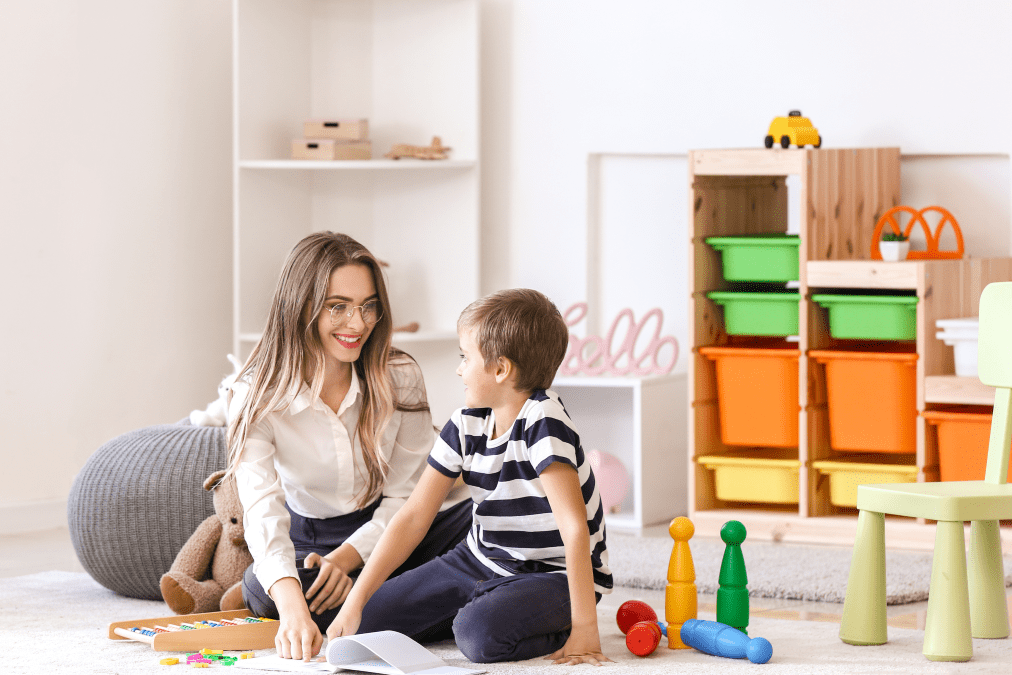
- Improving Social Communication Skills through Structured PlayStructured play is an integral part of ABA therapy and is highly effective for developing social communication skills. Through structured play, therapists guide children in activities that require turn-taking, sharing, and responding to social cues. For instance, playing a game where children have to ask for a turn or respond to a peer’s question can teach them the basics of conversation in a fun, low-pressure environment. Structured play not only enhances verbal skills but also helps children learn to interpret and use non-verbal cues, such as gestures and facial expressions.
- Modeling and Imitation TechniquesABA therapy often incorporates modeling, where the therapist demonstrates a behavior or phrase for the child to imitate. For example, if the goal is to teach the child to greet others, the therapist may model a simple greeting like “Hi!” and encourage the child to repeat it. This approach helps children learn new phrases, sounds, and behaviors through repetition and observation, building a foundation for more complex communication skills.
- Technology-Assisted Communication ToolsTechnology is becoming an increasingly useful tool in ABA therapy for supporting communication development. Various apps and devices are designed specifically for children with autism to facilitate communication through interactive visuals and voice output. These tools allow children to tap on images or symbols to communicate words and phrases, making it easier for them to express themselves and be understood. For some children, technology can bridge the gap between non-verbal and verbal communication by building confidence in expressing their needs and thoughts. Learn more about PECS here Pyramid Educational Consultants – PECS

The Role of Family Involvement in Communication Development
Family involvement is crucial in reinforcing the communication skills a child learns in ABA therapy. Practicing these skills at home can significantly enhance their effectiveness and help children apply what they’ve learned in different settings. Parents can work with ABA therapists to learn how to use techniques like PECS, positive reinforcement, and structured play during everyday routines.
For example, if a child is learning to use verbal requests, parents can encourage them to use their words during mealtime or when asking for a toy. Consistent practice helps reinforce the connection between communication and positive outcomes, making the skills more natural for the child.
Conclusion: Building Communication Skills with ABA Therapy
ABA therapy offers tailored approaches to building communication skills in children with autism. By breaking down communication into manageable steps, utilizing tools like PECS, and incorporating structured play, ABA therapy empowers children to express themselves more effectively. This progress not only enhances their ability to connect with others but also boosts their confidence and independence.
For families navigating the world of autism therapy, ABA provides a comprehensive approach to fostering meaningful communication skills. With the guidance of a skilled ABA therapist and the support of family members, children with autism can make remarkable strides in their ability to communicate and thrive.