

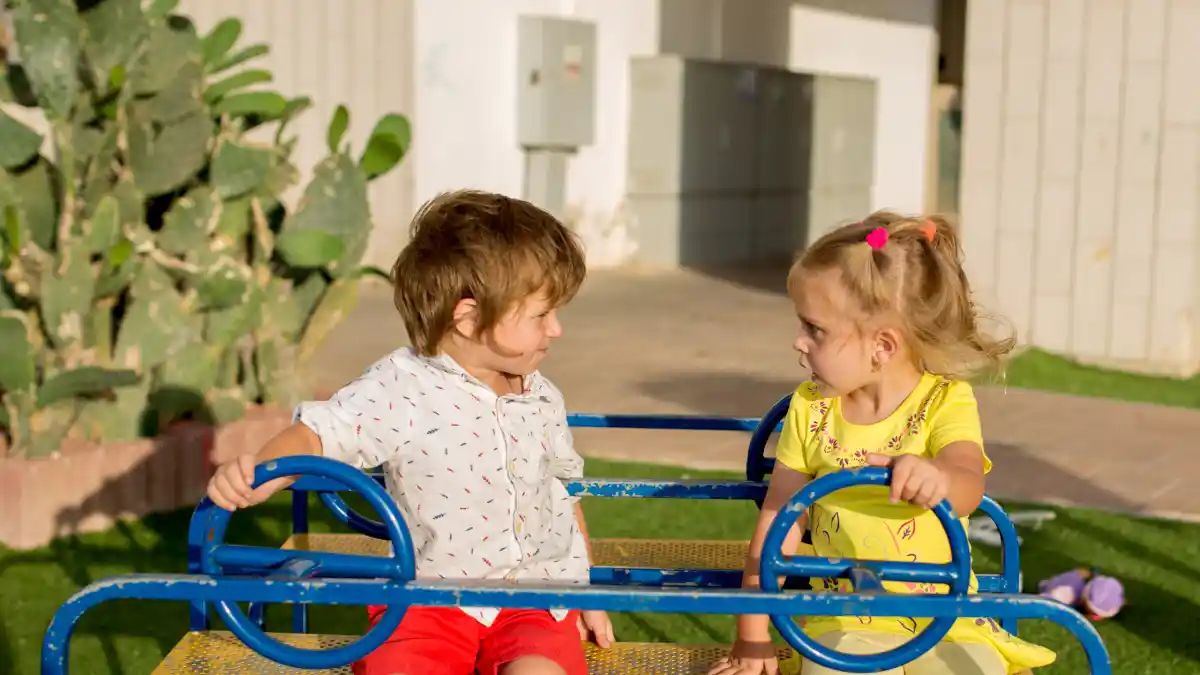
Social situations can be challenging for children with autism. They may struggle with eye contact, back-and-forth conversation, or knowing how to join a group activity. These are not permanent limitations. Social skills can be learned and developed with consistent, patient support.
Here are six strategies you can use at home to help your child build social confidence, along with an overview of how ABA therapy supports this work.
Why social skills matter
Building social skills helps your child:
- Form friendships and feel a sense of belonging
- Handle group activities with less frustration
- Learn turn-taking, empathy, and self-regulation
- Feel more confident at school and in the community
1. Educate yourself
Being the parent of a child with autism means learning alongside them. One place to start is researching Social Skills Training (SST), an evidence-based program designed to help children with autism understand and navigate social interactions. Learning how SST works gives you practical language and strategies you can use at home to reinforce what your child is building in therapy.
2. Explain socially acceptable interactions
Most children learn social norms by watching others and picking up on cues. Children with autism often need those norms explained more directly. Take time to walk your child through what specific social behaviors look and feel like, and why they matter.
Visual aids help. You can use pictures, videos, drawings, or simple books that walk through social scenarios step by step. Social stories are another effective tool: short, structured narratives that describe a specific situation, the expected behavior, and why it matters. A social story about greeting a classmate, for example, can reduce anxiety before a situation actually happens by making expectations clear in advance.
3. Reinforce positive behavior
Focus on what your child does well. When you notice your child displaying a positive social behavior, acknowledge it and reward it. This might be their favorite treat, a preferred activity, or extra screen time. The specific reward matters less than the consistency and timing. Reinforcing the behavior immediately after it happens is what builds the connection.
You may need to try a few different rewards before finding what works for your child. Rewards that are effective today may lose their appeal over time, so be ready to adjust.
Celebrate effort, not just success. If your child waves at another child for the first time, even briefly, that is worth acknowledging. Recognizing the attempt builds confidence and encourages more of the same behavior.
4. Practice at home
You cannot predict every social situation your child will encounter, but you can prepare them for common ones. Role-playing at home gives your child a structured, comfortable space to practice. Walk them through scenarios step by step: how to start a conversation, how to ask to join a game, how to respond when something feels unfair.
Invite one or two trusted friends over and make it a game. Taking turns playing different roles helps children practice both sides of an interaction and reinforces the importance of rules and cooperation.
Peer play is one of the most effective ways to build social skills in context. Carefully selected peer interactions allow children to imitate appropriate behavior, practice conflict resolution in real time, and discover new ways of connecting. ATG therapists often structure peer play as part of therapy for this reason.
5. Be patient
Progress takes time. It is not realistic to expect your child to change how they interact with others quickly. Improvement in social skills is typically gradual and looks different in every child. Stay consistent, keep the tone positive, and trust that the effort you are putting in now is building toward something real.
6. Shift your perspective on social interactions
Many social behaviors that feel natural to adults, such as making eye contact, saying excuse me, or knowing when to stop talking, are things most people learned over years without being explicitly taught. Children with autism may not learn these things through observation alone. That is not a failure. It means they need more direct instruction, more modeling, and more practice. Approaching social skills with that mindset makes the teaching process feel less frustrating and more purposeful.
How ABA therapy supports social skill development
At The Autism Therapy Group, social skill development is built into every care plan. Our BCBAs and RBTs use ABA techniques to break complex social skills into manageable steps, including:
- Sharing and taking turns
- Starting and maintaining conversations
- Working with others toward a common goal
- Joining a group already in progress
- Understanding facial expressions
- Recognizing tone of voice
- Responding to social cues
Sessions use modeling, role-playing, social stories, and positive reinforcement, personalized to your child’s age, interests, and current skill level. Your child’s therapist will also give you specific tools and strategies to practice between sessions.
ATG offers in-home and clinic-based ABA therapy across Illinois, Texas, and Wisconsin. Contact us to learn more about how we can support your child’s social development.