
Center-based ABA therapy for children with autism
Your child deserves a place built for them. Our centers provide the structure, resources, and expert team that help children with autism build real skills they carry into school, friendships, and everyday life.

The Autism Therapy Group is a family-owned ABA provider with centers in Illinois, Wisconsin, and Texas. Every session is led by therapists who are trained, certified, and committed to your child's progress.
What is center-based ABA therapy?
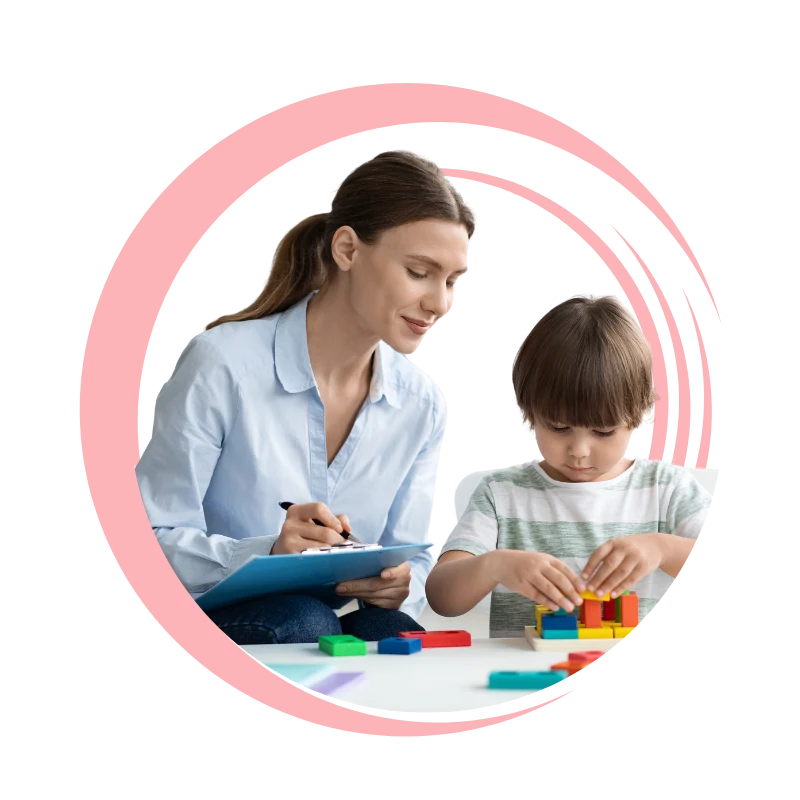
Center-based ABA therapy is Applied Behavior Analysis delivered inside a dedicated therapy center rather than at home or school. Children attend regular sessions at the center, where trained behavior technicians and Board Certified Behavior Analysts (BCBAs) work with them in a structured, resource-rich environment.
ABA therapy uses evidence-based techniques to build communication, social, self-care, and learning skills while reducing behaviors that interfere with daily life. In a center setting, those techniques are applied with more consistency, more specialized materials, and more qualified staff than most home environments can offer.
Center-based sessions typically run anywhere from 2 to 7 hours per day, 3 to 5 days per week, depending on your child's individualized treatment plan. More intensive schedules tend to produce faster, more durable outcomes, especially when started early.
Why center-based ABA works
Every child's situation is different, but center-based therapy consistently delivers outcomes for children across a wide range of needs. Here is why.
A structured environment that removes distractions
Our centers are designed for learning. Every room, every material, and every routine is set up to help your child focus. There are no TVs, siblings, or household interruptions competing for attention. That structure makes it easier for your child to practice new skills and helps those skills stick.
Resources your home simply cannot replicate
Our centers are stocked with a wide range of educational materials, therapeutic tools, and reinforcers that most families do not have at home. More resources means more opportunities to teach, practice, and reward progress every single session.
School-readiness skills, practiced before school ever starts
Our center spaces are intentionally designed to mirror a classroom. Your child practices sitting at a table, following group routines, transitioning between activities, and working alongside peers. By the time school begins, the routines feel familiar, not overwhelming. This is one of the clearest advantages of center-based therapy for children whose treatment plan calls for it.
Peer interaction that builds real social skills
Children in our centers interact with other children who share similar experiences and challenges. These peer interactions are carefully supported by our therapists. Your child gets to practice initiating play, taking turns, managing frustration, and making friends in a safe, guided environment where every moment is a teaching opportunity.
Consistent, intensive therapy with measurable progress
Intensity matters in ABA. Research consistently shows that children who receive more hours of high-quality ABA therapy make greater developmental gains. A center schedule removes logistical barriers, like therapist cancellations or home scheduling conflicts, and keeps your child on track toward their goals.
What a day at our center looks like
Every child's day is structured around their individual treatment plan. Here is what a typical center day looks like from arrival to pickup.
Arrival and warm-up
Your child is greeted by their behavior technician at the door. The first few minutes are dedicated to a predictable routine that helps your child transition smoothly from home to center. Predictability reduces anxiety and sets the tone for a productive day.
1
 2
Individualized skill-building
Most of the session focuses on your child's specific goals. These vary by child but typically include communication skills (requesting, labeling, conversation), social skills, academic readiness, self-care routines, and behavior goals. Sessions use structured teaching, play-based learning, and natural environment teaching, depending on what works best for your child.
Peer interaction and group activities
Structured group time gives your child the chance to practice social skills with peers in a safe, supervised setting. Our therapists coach each interaction so every moment becomes a learning opportunity, not just unstructured playtime.
3
 4
Data collection and BCBA oversight
Our behavior technicians collect data throughout every session. A supervising BCBA reviews that data regularly, adjusts treatment plans as needed, and meets with your family to share progress. You always know what your child is working on and why.
End-of-day debrief
Before pickup, your child's technician shares a brief summary of the day. What went well, what was challenging, and what you can reinforce at home. Your involvement between sessions matters, and we want to equip you to support your child's progress every day, not just during center hours.
5
Who benefits most from center-based ABA therapy
Center-based ABA therapy is a strong fit for many children, but it is an especially good match in these situations. Your BCBA confirms the right setting after your child's initial assessment.
- Children who recently received an autism diagnosis. Early, intensive intervention in a structured environment produces the strongest developmental outcomes. Starting in a center as soon as possible gives your child the best head start.
- Children preparing to enter school. The center environment directly teaches classroom skills like sitting, following directions, raising a hand, and working in a group. These are the routines that make or break a child's first year of school.
- Children who need more hours than in-home therapy can provide. Home-based schedules are often limited by therapist availability, space, and household distractions. A center allows for the intensive, consistent hours that research shows produce the best outcomes.
- Children who benefit from routine and predictability. Our center days follow predictable schedules that many children with autism find genuinely comforting. Knowing what comes next reduces anxiety and keeps your child ready to learn.
- Families who want more visibility into their child's progress. When therapy happens in our center, your child's BCBA and behavior technicians have more time with your child and more data to share with you. You get a clearer, more complete picture of what is working.
Center-based vs. in-home ABA: what each setting offers
Both settings deliver real results. Which one — or combination — fits your child best is a clinical determination our BCBA team makes based on your child's needs and their assessment, not a decision you have to make alone. This comparison can help you understand the differences before that conversation. Talk to our intake team to learn more.
| Factor | Center-Based ABA | In-Home ABA |
|---|---|---|
| Setting | Dedicated center, structured environment | Child's home, familiar surroundings |
| Peer interaction | Yes, daily with therapist support | Limited or none during sessions |
| School-readiness preparation | Strong: center mirrors classroom routines | Moderate: depends on home setup |
| Therapy intensity | Higher hours possible (up to full day) | Typically 2 to 4 hours per session |
| Therapeutic resources | Full access to center materials and tools | Limited to home materials |
| Generalization of skills | Strong in school and community settings | Strong in home setting |
| Best for | School prep, intensive intervention, peer skills | Routines and skills practiced where they happen at home |
Skills your child will build in our centers
Treatment goals are individualized for every child. Across our programs, children commonly work on skills in these areas.
Communication
Requesting needs, labeling objects, following directions, building vocabulary, and developing conversational skills.
Social Skills
Taking turns, initiating play, reading social cues, making and maintaining friendships, and managing group interactions.
Academic Readiness
Sitting and attending, following classroom routines, letter and number recognition, and pre-writing skills.
Self-Care and Independence
Dressing, hygiene, feeding, toileting, and managing daily routines with increasing independence.
Behavior Reduction
Replacing challenging behaviors like aggression, self-injury, elopement, or meltdowns with appropriate, functional alternatives.
Emotional Regulation
Identifying feelings, managing frustration, coping with transitions, and building resilience across different environments.
Our therapists
Your child's outcomes depend entirely on the quality of the people delivering their therapy. This is where we invest the most.
Every ATG center is supervised by a Board Certified Behavior Analyst (BCBA). BCBAs design individualized treatment plans, review session data, and adjust programming based on your child's progress. Your BCBA is your primary clinical partner throughout your child's time with us.
Day-to-day sessions are delivered by Registered Behavior Technicians (RBTs). Every one of our behavior technicians completes RBT certification, meaning formal ABA training, a national competency exam, and ongoing supervision by a BCBA.
We are also a certified Great Place to Work, which reflects how we hire, train, and support the people who work with your child.
What families say
“My son loves it here. He doesn’t want to leave when I pick him up. My family and I couldn’t be happier with them. I recommend this location.”

Insurance and payments
We accept most major insurance plans, and our intake team handles the benefits verification process so you do not have to navigate it alone. Insurance coverage for ABA therapy has expanded significantly in recent years, and many families are surprised to learn that their child qualifies for substantial coverage.

Our center locations
Center-Based ABA therapy is currently offered at the following ATG locations:
Illinois
- ItascaCenter-Based, In-Home and Hybrid
- LombardCenter-Based, In-Home and Hybrid
- NapervilleCenter-Based, In-Home and Hybrid
- RockfordCenter-Based, In-Home and Hybrid
- SpringfieldCenter-Based, In-Home and Hybrid
Texas
- Universal CityCenter-Based, In-Home and Hybrid
Wisconsin
- BrookfieldCenter-Based, In-Home and Hybrid
Center-based ABA therapy by community
Local details for the communities near our centers:
Boone County, IL
Cook County, IL
DuPage County, IL
Sangamon County, IL
Winnebago County, IL
Looking for a different approach?
Starting early makes a difference
ABA therapy has its greatest impact when it starts early, while young children are rapidly building communication and social skills. Our centers work with young children from the start, and the same team keeps supporting them as they grow. Learn more about early intervention ABA.
Parent training is part of every ATG program, in every setting. See how it works in our Parent Guide.
Common questions
What is center-based ABA therapy?
Center-based ABA therapy is Applied Behavior Analysis delivered inside a dedicated therapy center. Children attend regular sessions where a trained team works on individualized goals across communication, social skills, behavior, and daily living. The center setting provides more structure, more therapeutic resources, and more qualified staff than home-based therapy typically can.
Is in-home ABA better than center-based?
Neither setting is universally better. Research supports both. In-home therapy is strong for building skills in a child's natural environment; center-based therapy is generally stronger for intensive early intervention, school-readiness preparation, and peer skill development. Many children benefit from a combination of both. Your child's BCBA determines the right setting, or combination of settings, through assessment.
At what age is ABA therapy most effective?
ABA therapy is most effective when started early, typically between ages 2 and 6. During these years, the brain is highly adaptable, and skills developed through intensive intervention often generalize more quickly and durably. That said, ABA therapy produces meaningful outcomes across childhood and into adolescence. We serve children of all ages in our centers. Progress does not stop at age 7.
How many hours of ABA therapy does my child need?
Research suggests that intensive ABA therapy, ranging from 20 to 40 hours per week, produces the strongest outcomes for many children with autism, especially during early intervention. However, the right number of hours depends on your child's current level of need, their treatment goals, and what your family's schedule can support. Your child's BCBA will recommend specific hours based on a thorough assessment.
Does center-based ABA therapy replace school?
For most children, no. Center-based ABA therapy works alongside school, and one of its main goals is to build the routines, social skills, and communication abilities that make a classroom accessible. Some younger children are not yet ready for school and first need to build those school-readiness skills. For them, a full-day center program can take the place of school for a time. Your child's BCBA recommends the right schedule after the initial assessment. When your child does attend school, our team coordinates with the school so both environments use a consistent approach.
How involved will I be as a parent?
Very involved, and we want it that way. Parent involvement is one of the strongest predictors of long-term outcomes in ABA therapy. Your child's BCBA will meet with you regularly to review progress, explain treatment goals, and coach you on strategies to use at home. You will receive session summaries and have direct access to your child's clinical team throughout their time with us. Learn more about parent training in our Parent Guide.
Does insurance cover center-based ABA therapy?
In most cases, yes. The majority of major insurance carriers cover ABA therapy when medically necessary, which is typically established through an autism diagnosis. Coverage amounts, copays, and prior authorization requirements vary by plan. We verify your child's benefits before starting services and will walk you through exactly what your insurance covers. Contact us to start the verification process.
Does my child need an autism diagnosis to receive ABA therapy?
In most cases, yes. Most insurance carriers require an autism spectrum disorder (ASD) diagnosis to authorize ABA therapy coverage. If your child does not yet have a diagnosis, we can help connect you with the right resources to begin the evaluation process. Our intake team will guide you through next steps from your first contact with us.
What is the difference between a BCBA and an RBT?
A Board Certified Behavior Analyst (BCBA) is a licensed clinician who holds a master's degree in behavior analysis, has completed supervised clinical hours, and passed a national certification exam. The BCBA designs your child's treatment plan and oversees all clinical decisions. A Registered Behavior Technician (RBT) is a trained paraprofessional who delivers the day-to-day therapy under the BCBA's supervision. Every behavior technician completes RBT certification.
How long will my child be in ABA therapy?
Duration varies significantly by child. Some children make rapid progress and phase out of intensive services within 18 to 24 months. Others benefit from longer-term support. Your child's BCBA will review goals regularly and adjust the treatment plan based on progress. The goal is always to build the skills your child needs to thrive, and then to steadily reduce the level of support as those skills become independent.
Ready to get started?
We verify insurance at no cost and can usually get you scheduled within the week.